Israeli forces report 90% of coordinated West Bank olive harvests complete
Security officials say 16,000 tons of olives have been collected, generating an estimated 900 million shekels, as rights groups document hundreds of incidents involving farmers and settlers.
By Ananya Sharma ·
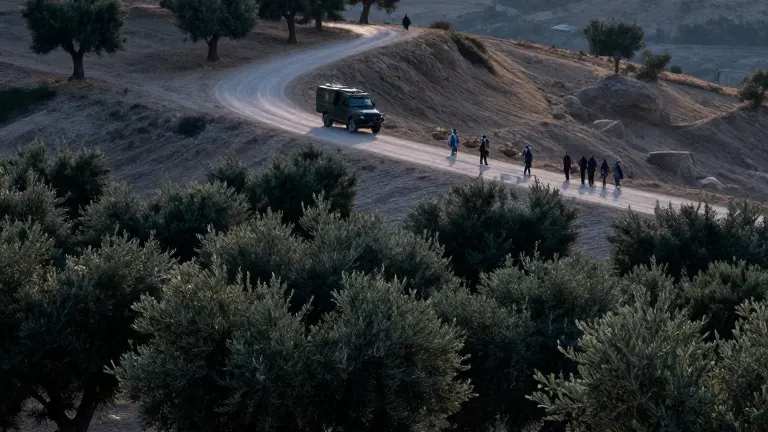
Israeli security forces declared this week that 90% of coordinated olive harvest operations in the West Bank are finished.
The announcement comes as the season winds down, with the military stating that troops worked alongside the Civil Administration to keep Palestinian farmers and Israeli settlers apart. The goal was to allow the harvest to proceed with minimal friction.
Civil Administration data shows that between 16,000 and 17,000 tons of olives have been collected. Officials estimate this production will yield roughly 900 million shekels in revenue for the region. The administration noted that the 90% figure applies strictly to harvests arranged in advance with authorities, not the total volume of all farming activity.
The security establishment pushed back against recent claims that its forces blocked farmers from reaching their land. In a public statement, officials said violent incidents occurred in only a small percentage of areas. They described the coordinated operations as largely smooth, adding that soldiers stepped in only to restore order when necessary.
Military spokesmen admitted they lack current data on how many farmers were unable to access their fields or secure coordination. They also noted a shortage of data on the total number of violent clashes involving settlers, farmers, or troops during the season.
Rights groups have documented a different picture on the ground. Yesh Din, an Israeli organization, recorded 446 incidents targeting Palestinian people and property between October 1 and November 16. This count includes 219 violent assaults and 209 cases of theft or damage. The group reported that more than 100 of these events happened while security forces were present.
Legal challenges have intensified alongside the fieldwork. In October, six farmers filed a petition with the High Court of Justice, arguing that soldiers and settlers have blocked their access to land near Nahalin since October 2023. The filing, submitted by the Association for Civil Rights in Israel, detailed road blockades and orders for farmers to leave their properties.
Violence has also drawn international attention. On October 16, American photojournalist Heidi Levine was beaten with sticks and kicked by settlers near Abu Falah, northeast of Ramallah. The next day, masked settlers attacked harvesters near Taybeh, damaging a vehicle belonging to the Belgian consulate while European diplomats looked on. Police opened an investigation into the incident.