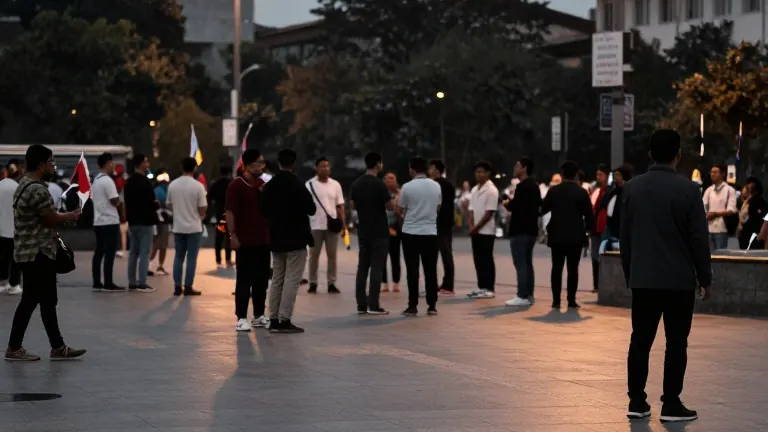
Israel Votes As Rightward Shift Dominates Ballot
The election marks the first vote since the 2023 Hamas attack, with polls indicating a continued drift toward the political right.
By Ama Ndlovu ·
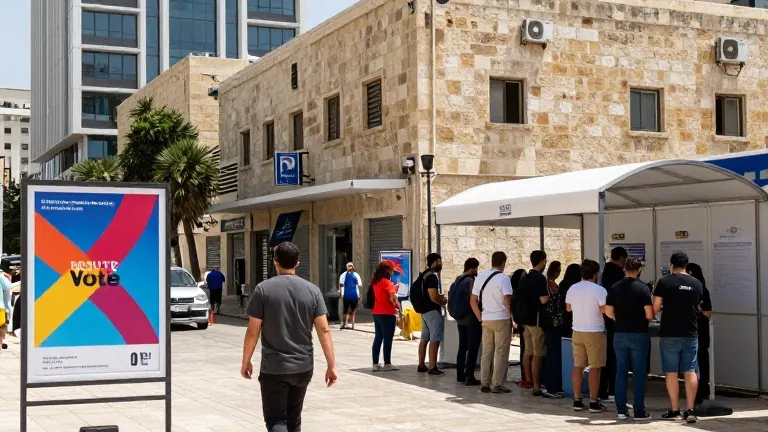
Israel held its national election on Tuesday, marking the first vote since the Hamas-led attack of October 7, 2023, and the subsequent war in Gaza. The contest is widely described as one of the most consequential in the country's recent history, with results expected to determine the future of Prime Minister Benjamin Netanyahu and the direction of Israeli governance.
Netanyahu, who has served as prime minister for an unprecedented duration, is seeking to extend his tenure. He leads the country's most right-wing governing coalition to date, which unites far-right ultranationalist groups with ultra-Orthodox Jewish parties. His main challenger is a self-styled Zionist opposition bloc that has largely embraced a right-wing approach to the state's challenges, leaving many voters with limited alternatives on the ballot.
The campaign was defined by questions of accountability for alleged security failures prior to the 2023 attack. Debates also centered on the military service requirements for the ultra-Orthodox minority and the political exclusion of Arab-led parties. These issues dominated the discourse, overshadowing direct discussions about the welfare of Palestinians in the occupied territories.
Political analysts indicate that the shift to the right predates Netanyahu’s current government. The collapse of peace processes and repeated security crises over the last few decades have eroded the political center. Legislative milestones, such as the 2018 Nation-State Law, have formally enshrined Jewish supremacy and facilitated the expansion of settlements in the West Bank.
Critics argue that the current administration accelerated this drift. The government pursued a judicial overhaul to limit the Supreme Court's power to review executive actions. This initiative was supported by National Security Minister Itamar Ben-Gvir and Finance Minister Bezalel Smotrich, who also provided political cover for intensified military activity in the West Bank.
Yehouda Shenhav-Shahrabani, an Israeli sociologist, stated that the political system operates within a framework of Jewish supremacy. He noted that none of the leaders presenting themselves as alternatives to Netanyahu can be described as left-wing. According to Shenhav-Shahrabani, the current situation is rooted in Zionist political thought rather than being the sole product of the current prime minister.
Ahron Bregman, a senior teaching fellow at King’s College London, observed that a change in leadership would alter the political atmosphere. He described Netanyahu as a deeply divisive figure who stirs strong emotions among Israelis. Bregman suggested that a new prime minister would likely calm domestic tensions, though he cautioned that the overall policy direction would remain right-leaning.
Yossi Mekelberg, a senior fellow at Chatham House, framed the election as a choice between a functioning democracy and a democracy in name only. He highlighted the potential for annexation of the West Bank, a concept previously suggested by government figures. Mekelberg emphasized that the stakes extend beyond individual names to the fundamental character of the state.
The election does not include a direct referendum on the treatment of Palestinians. More than 74,000 people have been killed in Gaza, yet mainstream candidates have largely avoided including Arab-led parties in potential coalition scenarios. Daniel Levy, a former government adviser, noted that the treatment of Palestinians is a consensus among Zionist parties, with differences existing only on the extent of state versus settler involvement in that process.
The next government will be formed following the count of votes, with the opposition likely to demand a return to rule-of-law principles. However, analysts agree that the new administration will reflect the sharp rightward turn taken by Israeli society after the events of October 7, 2023.