Hebron sealed as 2,000 residents expelled after checkpoint killings
Israeli forces flattened industrial zones and seized homes in the West Bank's largest city, turning local displacement into a central issue for Tuesday's national vote.
By Ama Ndlovu ·
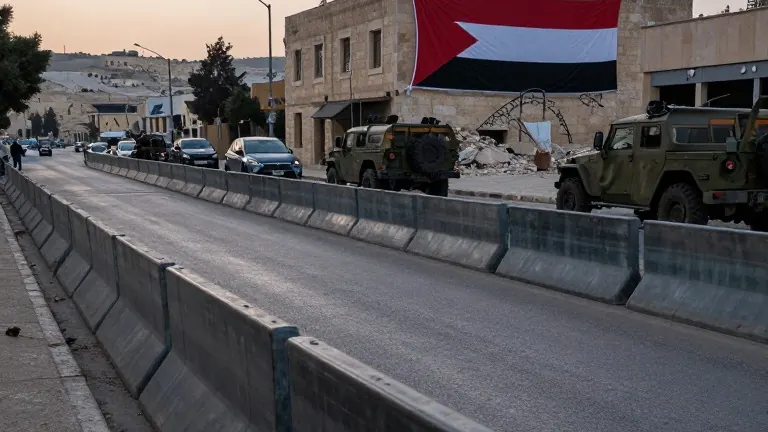
Hebron is now the focal point of Israel's election campaign following a deadly attack on a military checkpoint.
The conflict escalated after two Israeli soldiers were killed in a gun attack at a checkpoint on Friday. Prime Minister Benjamin Netanyahu and Finance Minister Bezalel Smotrich visited the site via televised appearances. Their ruling coalition is trailing in the polls with two days of campaigning left. Netanyahu warned that the military would launch operations of a scale unseen in the West Bank during nearly 60 years of occupation.
Within hours of the attack, the city of 250,000 residents was sealed off. Forces flattened the Farsh al-Hawa neighborhood, which was closest to the incident. By Sunday morning, the industrial area contained only rubble. Car workshops and a large ceramics plant were destroyed. Meanwhile, military units moved into the Ein Deir Baha district. Officials stated that at least one of the two attackers, both of whom were killed at the scene, was allegedly from this area.
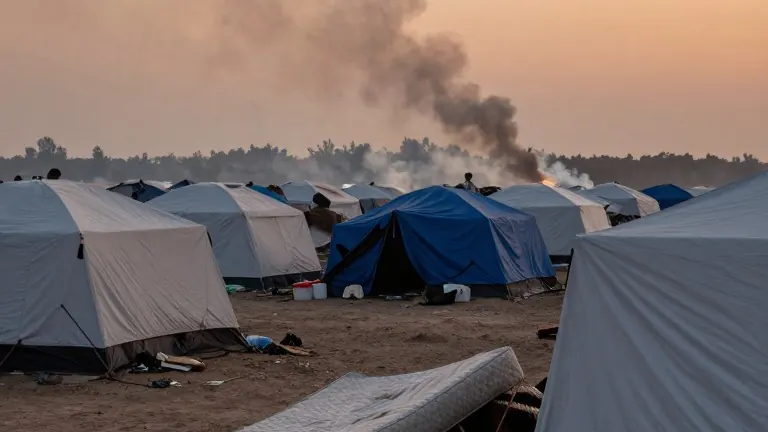
Fahed Ahmaro, an imam in the city, described being woken around midnight by loudspeakers on military vehicles. He was ordered to leave his home immediately for safety. Thirty members of his family lived in the house. He relocated his frail mother and several grandchildren to his daughter's residence. When he returned to collect belongings, a neighbor informed him that the army had blown up the gates. Ahmaro stated, "You don't know what you have until you lose it." On Sunday, he was purchasing clothes for his grandchildren while uncertain about the duration of their stay.
The Hebron municipality reported that 370 families, totaling nearly 2,000 people, were displaced from Ein Deir Baha. The Israeli army claimed residents left voluntarily and that civilians were permitted to evacuate temporarily. Ahmaro rejected this version, asking, "Never, never, never. Why should I leave my house?" Abdul Halim al-Tamimi, 77, said the military arrived at 1:30 am and gave his family ten minutes to leave. An intelligence officer warned that refusal would result in displacement similar to that seen in Gaza. The family was forced out at 3 am. By Sunday morning, their villa served as an army headquarters, draped in Israeli flags and surrounded by military vehicles.
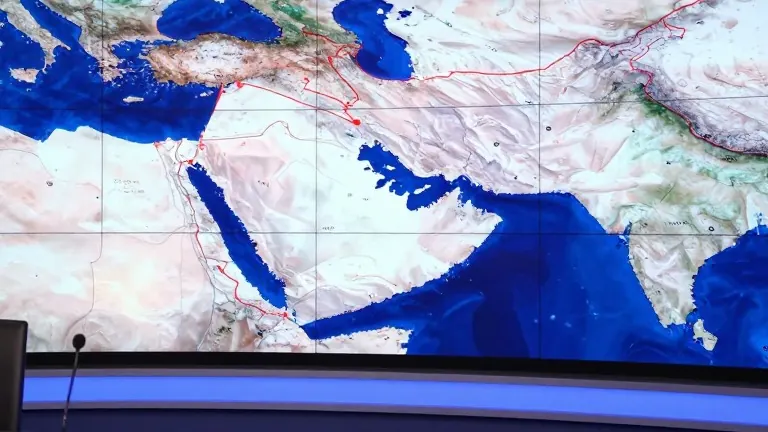
The army stated that approximately 2,000 locals belonged to the Jaba'a clan, which it described as associated with Hamas. Residents countered that the clan consists of at most 150 people and lacks a reputation for radicalism. Tamimi, whose family belongs to a different clan, suggested the operation served election publicity. By Sunday evening, all roads in and out of Hebron remained closed to cars behind steel barriers. Only pedestrians could move through the city. Delivery driver Wasam Sadi arrived at a checkpoint with a smashed windshield after being attacked by settlers. Mayor Yousef al-Jabari labeled the measures collective punishment and noted that media were kept out of the district. Palestinians in the West Bank cannot vote on Tuesday, but the election outcome will determine their political future.