Exit polls show 52 seats for Netanyahu rivals in Israeli vote
Voters delivered a sharp rebuke to the Prime Minister, leaving a fragmented parliament and weeks of uncertain coalition talks.
By Ama Ndlovu ·

Israeli exit polls released Tuesday indicate that Prime Minister Benjamin Netanyahu’s opponents have secured a solid majority in the next parliament, with the opposition winning approximately 52 seats compared to Netanyahu’s bloc, which claimed about 50. Arab parties are projected to take 18 seats, creating a tight margin that will force extensive negotiations before a new government can be formed.
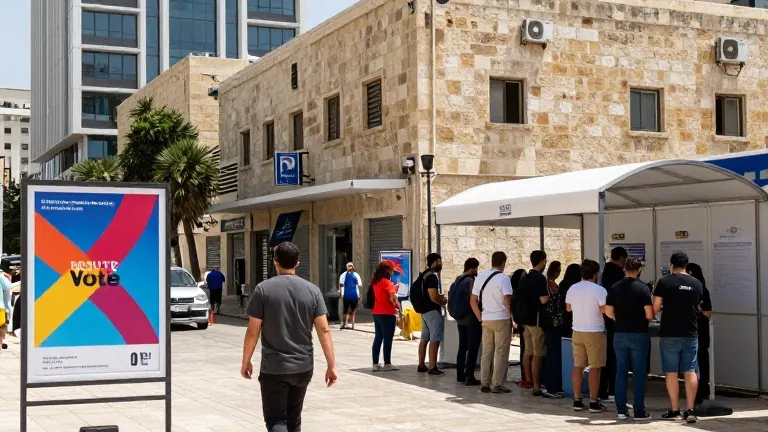
The voting process concluded after a campaign widely viewed as a referendum on Netanyahu’s nearly 17-year rule. Voter turnout reached its highest level since 1999, with the Central Elections Committee reporting that more than 77% of the over 7 million eligible Israelis cast ballots. Tens of thousands of voters reportedly traveled from overseas to participate in the election.
The political timeline now shifts to coalition building. The Israeli president must assign the task of forming a government to the party leader with the best prospect of success, typically the one holding the most seats. If Likud emerges as the largest single party, Netanyahu could claim that right. Otherwise, former military chief Gadi Eisenkot faces the challenge of uniting disparate opposition factions, potentially requiring a partnership with Arab-led parties to reach a majority.
Eisenkot addressed supporters immediately after the exit polls were broadcast, describing the results as a "complete lack of confidence" in the current leadership. He vowed to form a Zionist government committed to military conscription as soon as possible. In contrast, Netanyahu had not made a public statement two hours after the polls were released. His supporters at party headquarters chanted his name and displayed flags bearing his face.
The next steps depend on whether these fragmented groups can agree on a governing platform. If no coalition can secure a majority, Israel could face new elections as early as next year, echoing the five elections held between 2019 and 2022 due to similar stalemates. Preliminary results are expected within hours, while final counts may take days to finalize.
The election follows the deadliest attack in Israel’s history on October 7, 2023, which sparked wars in Gaza, Lebanon, and Iran. These conflicts have strained international alliances and fueled domestic debate over the state’s character. The opposition aims to preserve secular foundations and improve Israel’s standing, while Netanyahu’s allies view him as a steady hand protecting national security during a critical period.
No single party has won an outright majority in the 120-seat Knesset in modern history, forcing leaders to forge coalitions. Minority governments are possible but require external support to pass legislation. The outcome will determine whether Israel moves toward a new leadership structure or returns to the polls.