EU naval force reports 79 pirate attacks since late 2023
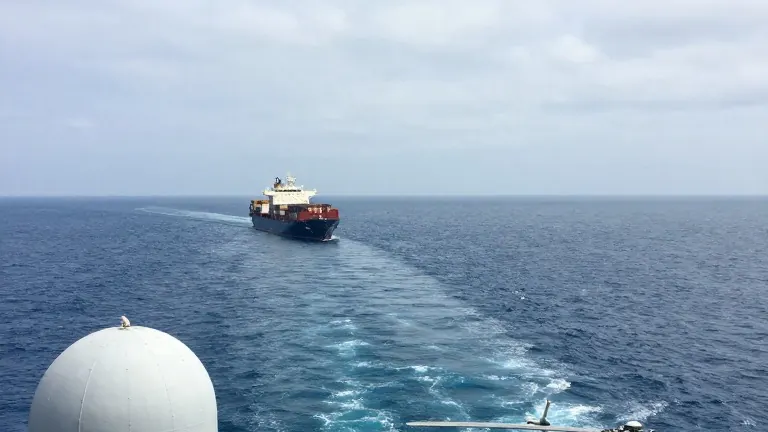
The Spanish frigate Santa Maria leads Operation Atalanta in the Gulf of Aden, where rising instability has renewed threats to global shipping lanes.
By Ama Ndlovu ·
Seven-nine pirate attacks have occurred in the Gulf of Aden and western Indian Ocean since November 2023. The count includes roughly 30 incidents following the outbreak of the Iran war in February 2026, according to Portuguese Commodore Jose Rodrigues Pedra, the commander of the European Union’s Atalanta mission at sea.
The EU operation, established in 2008, currently patrols a region where the Bab el-Mandeb Strait handles about 12 percent of global trade and a quarter of container traffic. This waterway, which is less than 30 kilometers wide, has become a critical alternate route for oil exports from the Gulf as movement through the Strait of Hormuz is disrupted.
Vice Adm. Ignacio Villanueva, who commands Operation Atalanta, linked the rise in maritime crime to regional conflicts in Yemen, the Horn of Africa, and Iran. He noted that instability in these areas drives illegal activities, which in turn push local clans toward the sea. "Instability causes instability. Instability causes illegal activities. Illegal activities cause clans to go to the sea," Villanueva said.
The mission operates from the Spanish frigate ESPS Santa Maria, a 4,000-ton warship crewed by more than 200 personnel. The vessel is equipped with heavy-caliber guns, artillery, torpedoes, and missiles. A helicopter and drone launch from its stern to conduct aerial surveillance and deter potential pirates. Cmdr. Fernando Maria Zumalacarregui Alario, the ship’s commanding officer, explained that threats to cargo ships directly impact global prices and daily life in Western nations.
Somali piracy is resurging due to economic malaise, malnutrition, and political impasse. The United Nations reported in February that around 30 percent of the population faces critical food insecurity amid cuts to international aid. Between April and August of this year, pirates hijacked six commercial vessels. Five were later freed, but the Tanzanian-flagged tanker MT Asana remained under pirate control in Somali territorial waters as of an October 16 update, with 22 seafarers still captive.
The International Maritime Organization confirmed that 44 seafarers were freed from the tankers Honour 25, Eureka, and Sibu 1. However, five crew members died during the September operation to recover the Honour 25, which had been held since April. Indian forces also freed an Iranian fishing vessel in early November after a 48-hour operation, highlighting the use of smaller boats as bases for raids on larger ships.
Analysts suggest that high fuel prices, driven by the Iran war, are compelling people to seek new livelihoods through piracy. Christopher Hockey, a fellow at the Royal United Services Institute, stated that piracy benefits both Iran and the Houthis by disrupting maritime traffic. He warned that shipping lanes may soon divide between vessels with costly armed guards and those without, noting that no vessel with an armed security team has ever been hijacked.
Shipping companies are responding by rerouting vessels and increasing insurance costs. Mohammed al-Basha, founder of the Basha Report risk advisory firm, said the Houthis have approached some companies to offer protection services for the Bab el-Mandeb strait. The EU’s Operation Atalanta works alongside Operation Aspides, which focuses on the Red Sea, to maintain security in the region.