Latin American Leaders Rally to Counter Surging Antisemitic Attacks
Over 250 delegates from 13 nations met in Buenos Aires to address the sharp rise in anti-Jewish sentiment following the October 7, 2023 attacks.
By Ananya Sharma ·
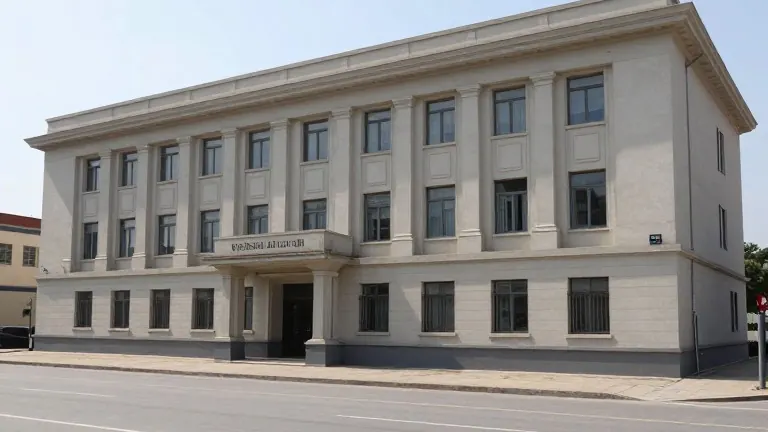
More than 250 Jewish leaders and government officials from 13 Latin American countries gathered in Buenos Aires on November 1 to confront a sharp rise in antisemitism. The event, known as the Latin American Forum to Combat Antisemitism, was jointly organized by the Israeli Foreign Ministry and the Latin American Jewish Congress. Participants focused on how the region's relationship with the Jewish diaspora has changed since the October 7, 2023, attacks on Israel.
The forum addressed the deep historical roots of prejudice in the Americas. Marcos Peckel, director of the Confederation of Jewish Communities of Colombia, noted that Spanish conquistadors imported stereotypes that persist today. He cited the Royal Spanish Academy's dictionary, which still defines the word for Jew as miserly. Peckel explained that common Colombian phrases equate Jewish identity with dishonesty, a prejudice that thrives even among those who have never met a Jewish person.
Since late 2023, antisentiment has become a central feature of domestic politics. Fernando Lottenberg, the Organization of American States commissioner for monitoring antisemitism, described the pre-October 7 climate as a foretold tragedy. He stated that Zionism has become a divisive political symbol in the region. In recent elections, candidates in Argentina, Colombia, and Brazil have campaigned with Israeli flags, often aligning the country with the political right.
This political polarization has created tension within the Jewish community. Peckel observed that while the right supports Israel, the left, where many Jews have traditionally held influence, often opposes it. He described this split as a complex challenge for communities that have historically contributed to left-wing movements. The division has turned a religious and ethnic identity into a partisan issue in several Latin American nations.
Delegates also discussed the need for stronger legal frameworks to protect minorities. Lottenberg urged countries to adopt the International Holocaust Remembrance Alliance definition of antisemitism. When the OAS began its monitoring work, only four nations in the hemisphere had adopted the definition. Today, that number has risen to 11, including recent additions such as the Dominican Republic, Paraguay, and Peru.
Argentina currently holds the presidency of the International Holocaust Remembrance Alliance. Fabiana Loguzzo, the country's representative, emphasized the need to bring Holocaust education to Latin America rather than viewing it as solely a European concern. Argentina is the only full member of the alliance in the region, while Uruguay holds observer status. Loguzzo stated that the region must expand the frontiers of memory to include the area where many Nazi war criminals found refuge after World War II.
Claudio Epelman, executive director of the Latin American Jewish Congress, warned that silence in the face of incidents is what truly defines an antisemitic society. He argued that the rise in attacks since October 7 requires coordinated action rather than just analysis. The forum concluded with a focus on implementing national anti-discrimination laws and strengthening democratic institutions to protect minority communities.