Indonesia's President apologises to neighbours over wildfire smoke
Jakarta revoked 17 company concessions and deployed 71,000 firefighters as smoke from Sumatra, Borneo and Papua drifted into Singapore and Malaysia.
By Ama Ndlovu ·
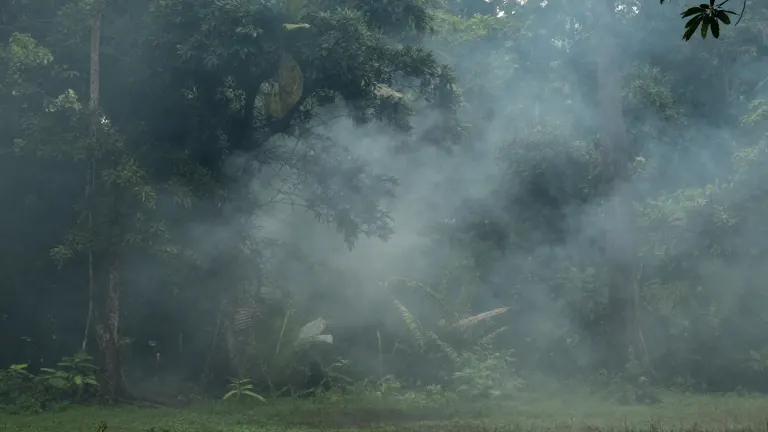
Indonesian President Prabowo Subianto formally apologised to Singapore and Malaysia on Sunday during an ASEAN summit in Manila. The gesture followed months of smoke from wildfires crossing borders and covering parts of the two neighbours. The presidential office confirmed the apology was delivered during a plenary session of the regional gathering.
Subianto stated that his administration had adopted a zero-tolerance policy toward companies involved in the fires. He reported that authorities revoked 17 company concessions. The government has 26 companies under investigation, has charged 11 of them, and has listed 23 others for charges. Police are currently examining 104 companies in total. Indonesia deployed 71,000 forest firefighters to the scene, and 16 people died while fighting the blazes.
These fires mark the most intense season in 11 years. The blazes primarily scorched areas on the islands of Sumatra, Borneo, and Papua. Singapore and Malaysia have sent aid to assist with firefighting efforts. Both nations have largely avoided public criticism of Jakarta despite the persistent haze.
Philippine Foreign Minister Theresa Lazaro said later that Jakarta spoke frankly about its response during the summit. The apology came after friction in October, when Indonesian Government Communications Agency chief Syahganda Nainggolan suggested that Indonesia’s forests provided oxygen to its neighbours when they were not sending smoke. That comment drew sharp reactions from regional officials.
The 2002 ASEAN Agreement on Transboundary Haze Pollution legally binds the bloc's 11 members to address cross-border air pollution. However, the treaty lacks a judicial enforcement mechanism, leaving disputes to negotiation. Implementation has lagged, with the coordinating office in Jakarta opening only in April, nearly 25 years after the agreement was first envisioned.
The diplomatic move coincided with a meteorological shift. On Thursday, the ASEAN Specialised Meteorological Centre reported that no transboundary smoke haze remained in southern Southeast Asia. Officials linked the improvement to heavy rain and a drop in fire hotspots in Sumatra and Kalimantan provinces.