French crowds take to the streets as school crisis deepens
Massive nationwide marches in France have erupted over school conditions and police tactics, marking a significant social challenge for President Macron in his final months.
By Ama Ndlovu ·
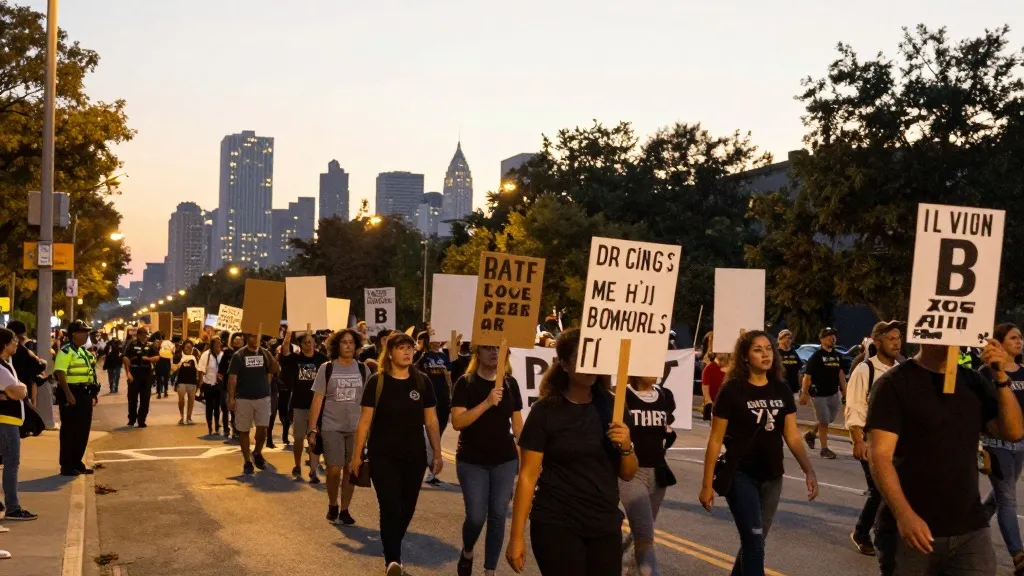
France has seen one of its largest demonstrations in recent years, with hundreds of thousands of people marching across the country this past Saturday. The rallies were largely peaceful and focused on supporting schoolchildren who are demanding better resources and safer learning environments.
The core of the protest is a growing frustration with the state of education. Students aged 15 to 18 initially began striking in mid-September over staff shortages, crumbling buildings, and overcrowded classrooms. This student-led movement has since expanded into a broader social uprising, drawing in teachers, parents, and trade unions. In Paris alone, government estimates suggest at least 110,000 people joined the march, while national figures range from 400,000 according to the state to 800,000 according to union representatives.
While the mood in many cities was festive, with brass bands playing and families walking together, tensions did flare. At the end of the Paris route, groups of masked men who had not participated in the main peaceful march threw objects at police. Officers responded with teargas and water cannons. Similar clashes occurred in Lyon, Lille, Montpellier, Nantes, and Toulouse, where police used teargas to keep crowds away from city centers, and bin fires were lit in Marseille.
A major point of contention is the government's approach to policing. Many protesters feel that riot officers are being used too aggressively to target school demonstrators rather than seeking political solutions. Criticism is also directed at President Emmanuel Macron, who is facing a political crisis in his final months in office. He has banned non-union demonstrations deemed illegitimate and has kept many protests away from central areas. One 43-year-old communications worker, Nadège, noted that people are now afraid to protest, calling it a legal right that needs defending.
The atmosphere is charged with a sense of urgency. A 21-year-old student described the situation as increasingly authoritarian, while Jérôme Rodrigues, a prominent figure from the 2018 yellow vest movement, stated that the government is pushing demonstrators to the edges of cities. Police investigations are currently underway after some children and protesters were injured by explosive police weaponry. The interior minister reported 135 arrests nationwide and the confiscation of various items, including metal balls, fireworks, and even a katana sword.
There are open questions about how this will evolve. Demonstrators are likely to continue marching every weekend, and the movement has gained momentum in other cities like Orléans, where protesters clashed with a congress of the National Rally party. As Macron prepares to step down next year, the government faces the challenge of balancing security with public demands for change.
For now, the focus remains on the schools. Parents and students alike are united in their message that the current system is failing. Whether this leads to political concessions or further unrest remains to be seen, but the energy on the streets suggests that the issue is far from resolved.