Diplomatic Resilience: EU Ambassador Details Daily Life in Kyiv Amid Russian Strikes
Katarína Mathernová describes sandbagged walls, mattress sleeping, and water cuts as the EU delegation continues operations despite intensified air raids.
By Ama Ndlovu ·
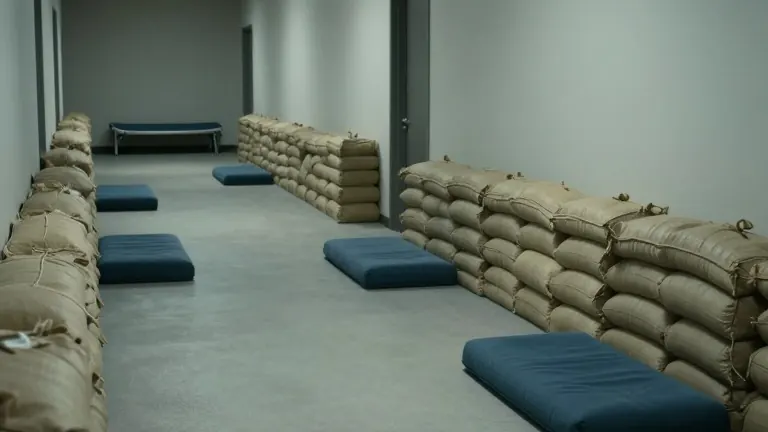
The European Union’s delegation in Kyiv has installed soft seating in its corridors and placed folding beds in its rooms as Russian attacks on the capital intensify, according to EU Ambassador Katarína Mathernová. She disclosed these preparations in an interview with The Guardian, reported by European Pravda, describing the mission’s current operational reality.
The mission has reinforced its outer walls with sandbags. Inside, staff use the fitted seating to wait out air raids. Mathernová noted that her building recently suffered water outages due to the strikes, which she characterized as a deliberate signal from Moscow targeting the city’s infrastructure.
“I think they are warning shots. They [the Russians] are more and more brazen and callous,” Mathernová said. “The level of attacks are much higher than last year, and the power cuts earlier. We’ve had no water in our building. The soft underbelly of a modern city is its sewage system.”
Mathernová’s personal routine reflects the shift in the capital’s security posture. When Russian strikes begin, she sleeps on a mattress placed in the bathroom of her hotel room. Her colleagues have reported similar adaptations, with many living in unheated apartments or spending nights in shelters without heat.
The ambassador stated that Kremlin leader Vladimir Putin’s strategic objective is to destroy the European Union. She added that recent threats aimed at embassies in Kyiv seek to pressure diplomats from the Global South into departing the country. Most ambassadors maintain that their continued presence signals solidarity with Ukraine’s leadership.
Every EU embassy has announced it will remain in Kyiv. The delegation’s physical adjustments, from extra showers to reinforced walls, indicate a decision to maintain operations on the ground. The presence of diplomats is intended to demonstrate that the international community remains engaged despite the escalating violence.
In a separate statement, Boris Ruge, the German ambassador to Ukraine, said Moscow issued threats ahead of German Chancellor Friedrich Merz’s upcoming visit to the capital. The sequence of events underscores the diplomatic pressure Russia is applying through military action on the city’s infrastructure and diplomatic enclaves.