
St Kitts and Nevis Premier Warns of Economic Shock as EU Pressure Forces End to Citizenship Program
The premier of Nevis has cautioned that the decision to phase out the nation's citizenship-by-investment scheme could severely strain public services and the overall economy.
By Adrian Carter ·
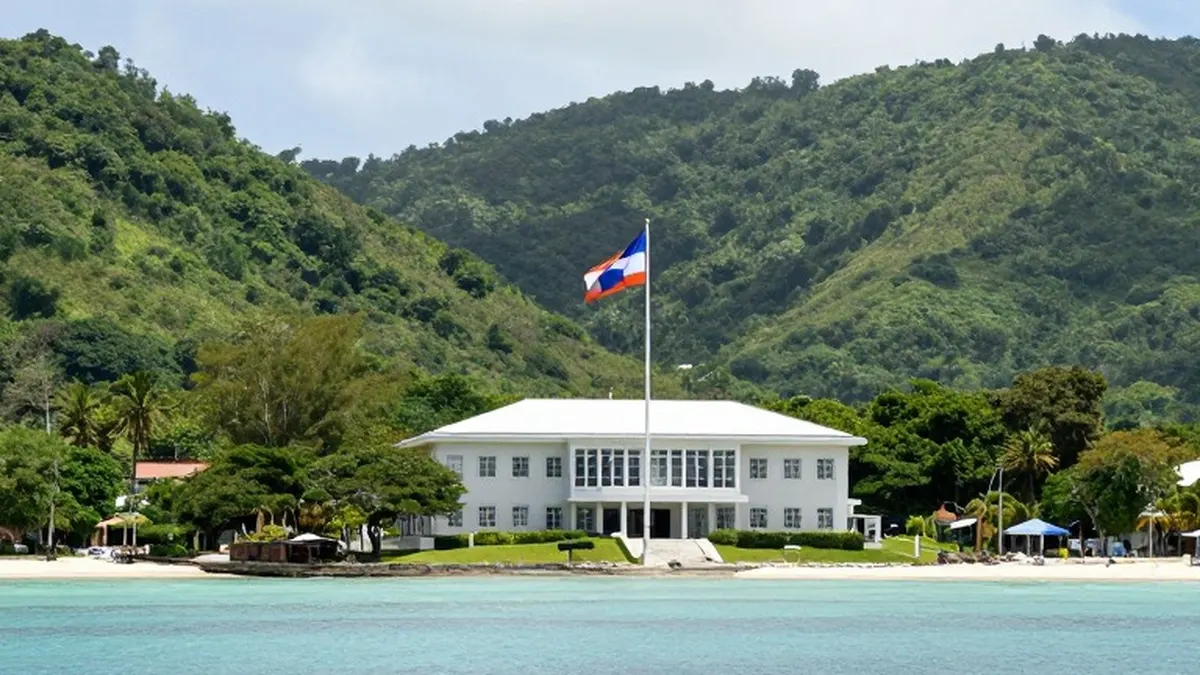
Terrance Drew, the prime minister of St Kitts and Nevis, announced on Friday that the Caribbean nation will wind down its long-standing citizenship-by-investment program. This decision follows threats from the European Union to revoke visa-free access for the country if it does not phase out the lucrative scheme. The move marks a significant shift for the twin-island state, which has relied heavily on the program for government revenue for decades.
Mark Brantley, the premier of Nevis, expressed concern over the economic implications of the shutdown. While he acknowledged that the country had limited options in the face of EU demands, he stated that he did not support the complete winding down of the program. Brantley argued that the abrupt end to a key revenue stream could jeopardize the nation's ability to support its citizens and maintain essential public services.
The citizenship-by-investment program, which St Kitts and Nevis pioneered 42 years ago, allows wealthy foreigners to obtain passports by investing in local infrastructure and development projects. Over the years, this initiative has generated billions of dollars for the country. In certain periods, it has represented the largest portion of the government's total revenue, making the economy highly dependent on this single source of income.
The pressure to reform came from a letter sent in June by the European Commission to five Caribbean nations operating similar programs: St Kitts and Nevis, Dominica, Antigua and Barbuda, Grenada, and St Lucia. The EU warned that these countries might lose their visa-free access to the 29-country Schengen area if they did not begin phasing out their citizenship schemes. The deadline set by the EU for St Kitts and Nevis to complete this transition is June 1, 2028, a date Brantley described as frankly ludicrous.
Prime Minister Drew attributed the need for change to mismanagement by previous administrations. He cited issues such as underselling citizenship rights to undercut competitors, a controversial prison project, and weak escrow protections that failed to ensure investment sums were properly paid into the citizenship unit. Despite leading major reforms in partnership with international bodies including the US Treasury, Drew argued that continuing the program risked the country's access to international banking and visa-free travel to parts of Europe.
Brantley criticized the EU for forcing the change without offering adequate assistance to help the nation transition to other industries. He highlighted the significant contribution of these programs to the Caribbean's gross domestic product. According to Brantley, the revenue generated has been crucial for ensuring that citizens have adequate access to water, education, and healthcare. He noted that he has not yet seen any corresponding suggestions of support from the European Union to help navigate this economic shift.
In his statement, Drew acknowledged that while the program did a lot of good, it also created a danger by making the country too dependent on a single source of income. He warned that when one source pays for half or more of everything, the nation is at its mercy, and if it stops, everything stops. This concentration of revenue, he said, was akin to putting all eggs in one basket.
The government aims to diversify its economy by strengthening sectors such as tourism, yachting, and digital and creative industries. Drew also emphasized the sale of clean geothermal energy as a central part of the new strategy, with drilling and exploration already planned. He stated that raising taxes is not part of the plan to manage the reduced revenue from the citizenship program.
The five Caribbean governments have taken differing positions on the EU demand. Antigua and Barbuda has expressed willingness to end its program but is negotiating for a longer transition period. Grenada has indicated it wants its program to continue until 2032, while Dominica and St Lucia have responded to Brussels without publicly committing to ending their schemes. As the region navigates this change, local leaders are focused on growing their economies to offset the loss of investment income.
The decision highlights the complex relationship between small Caribbean economies and global financial and political powers. As the region prepares for the transition, the focus remains on how to maintain public services and economic stability without the substantial funds previously provided by the citizenship-by-investment programs.