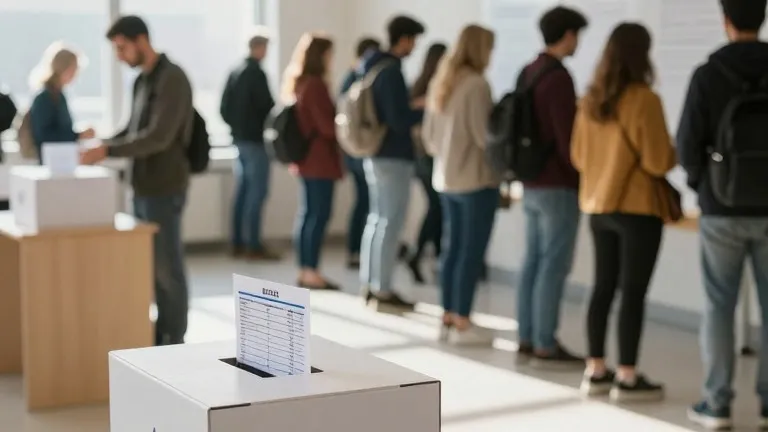
Youth Ballots Could Flip 12 Knesset Seats
The Israel Democracy Institute estimates that 640,000 first-time voters, representing 10% of the electorate, may determine the outcome of Tuesday's election.
By Adrian Carter ·
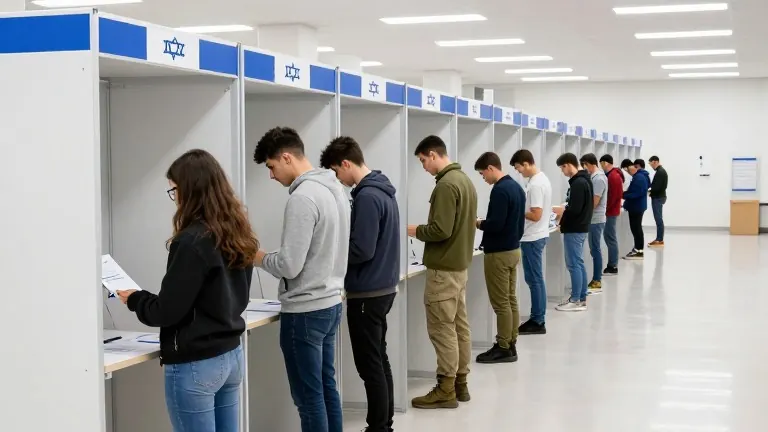
Israeli voters head to the polls on Tuesday, October 27, in a contest where first-time ballots could carry decisive weight. The Israel Democracy Institute (IDI) calculates that 640,000 citizens aged 18 to 22 are eligible to vote. This cohort constitutes nearly 10% of the total electorate. Their choices could determine as many as 12 seats in the 120-member Knesset.
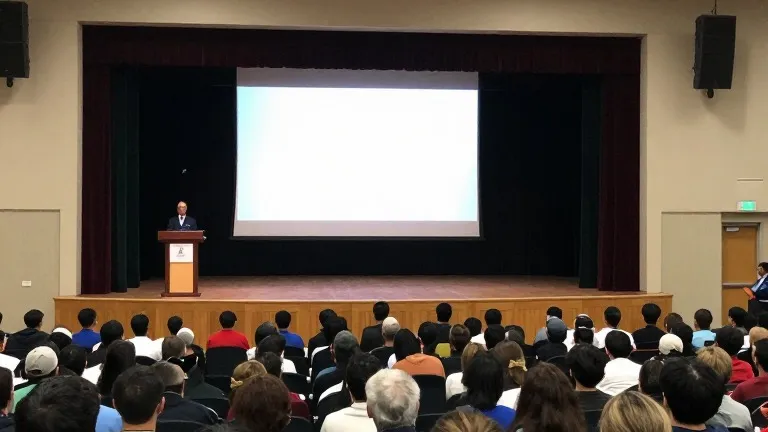
Yael Chernyvsky, 18, of Ramat Hasharon, said she is voting to change the future of the country. She spoke at a Tel Aviv event attended by more than 1,000 first-time voters. Chernyvsky, who is in an army preparation program in the Negev, blames Prime Minister Benjamin Netanyahu for the country's problems. She has not chosen a party but will probably support either the Democrats or Yashar. Both parties belong to the opposition change bloc. Netanyahu has served as prime minister since 2009, with a brief break in 2021 and 2022.
Tammy Hoffman, head of the education policy program at the IDI, co-sponsored the event with the Yigal Allon Center. She stated that Israel is a young country with a high birth rate. Hoffman said that if turnout is high, first-time voters will make a difference. The IDI surveyed prospective Jewish and Arab voters in May. Between 80% and 95% said they would definitely or probably vote. Secular Jewish youth showed the highest certainty. Eighty-seven percent of Arab respondents said they intend to vote.
These figures contrast with a youth turnout of 47% in the 2024 US presidential election. A separate poll for Ynet and Yedioth Ahronoth found 67% of young respondents certain they would vote. Another 19% thought they would. National security and cost of living ranked highest among both Jewish and Arab respondents. Hoffman noted that these young people experienced the pandemic, judicial reform protests, and the events of October 7. She said they are worried about their future.
Political leanings remain varied. Hoffman noted that Jewish Israeli voters have moved rightward over the past two decades. However, military service can shift views by raising questions about war goals. An N12 poll on September 23 found 74% of young people described their views as right-wing or center-right. Twenty-three percent identified as left-wing or center-left. In that poll, 16% would vote for Eisenkot's Yashar and 14% for Netanyahu's Likud. Hoffman added that mock elections at high schools showed most students backing Yashar and Beyachad, led by Naftali Bennett and Yair Lapid.
Individual voters reflect this range. Omer Gross of Jerusalem, in an army-prep program in the Golan, plans to back the Religious Zionist party. He disagrees with Bezalel Smotrich's approach in Gaza but supports his policies in the West Bank. Gross said, "We need a strong, secure Israel." His program-mate Tomer Shiloh, 18, of Herziliyah, will vote for the change bloc. He wants the next government to require ultra-Orthodox men to serve in the IDF and to lower living costs.
Sgt. M, a 22-year-old reservist, said universal service is his top priority. He will vote for the Democrats on economic grounds, citing the cost of tuition, books, food, and housing. Khalel Alaa Sabeh, 18, of Shef-Amra, wants an Arab party to close resource gaps and tackle crime. He is urging friends to vote and said, "I won't leave the country. This is my land, this is my home."
More Politics · World news · Report a business · Got a Story?