Yemen Frontline: New Missile Barrage Targets Saudi Arabia and Aden
Escalating hostilities bring renewed uncertainty to travel and energy security as attacks hit key infrastructure in both nations.
By Ananya Sharma ·
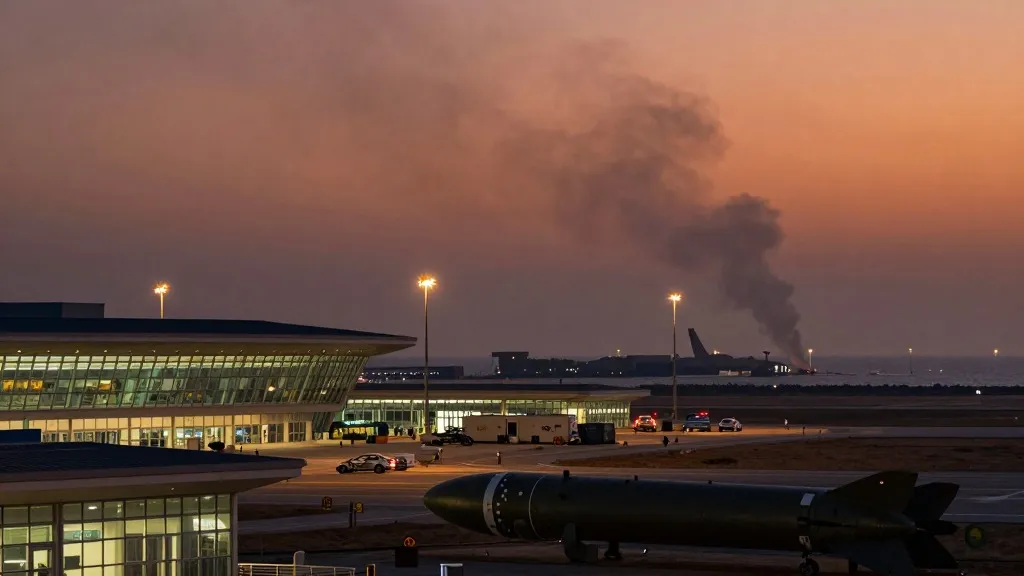
For residents of Aden and travelers relying on its primary gateway to the world, the recent days have brought a sharp return to instability. The internationally recognized government’s Transport Ministry confirmed that two ballistic missiles struck Aden International Airport on Saturday, marking the fourth such incident within the current month. Officials warned that these strikes pose a direct threat to civil aviation safety, creating significant humanitarian and economic consequences for citizens who depend on the facility for their daily lives and long-distance travel.
The attacks extend well beyond the airport terminal. Yemeni authorities reported that the coastguard headquarters and another building were also hit during the assault. The Houthi group claimed responsibility for targeting the al-Nasr camp and a naval military base in the city. In a related incident on Friday, the Yemeni army announced that a Houthi missile malfunctioned and crashed into a family home in Sanaa, a city under Houthi control. The military stated that the explosion killed three people and noted that this was part of a series of technical failures observed in the group's weaponry over recent weeks.
The conflict has simultaneously intensified on the Saudi side of the border. Saudi Arabia’s civil defence agency confirmed on Saturday that two ballistic missiles were launched toward Mecca and Medina. The agency warned of falling shrapnel after intercepting the projectiles, while images released by the Saudi Press Agency appeared to show a large, blackened missile fragment that landed within Saudi territory. Jasem Mohamed Albudaiwi, the Secretary-General of the Gulf Cooperation Council, described the attacks as heinous, stating that they embodied a blatant disregard for the lives and security of civilians.
The warring parties have also clashed over the specific targets of the latest barrage. Houthi officials disputed the narrative that the holy cities were the primary aim, calling that claim a huge lie. Instead, they stated that their intended targets were three Saudi airports, oil infrastructure, and an airbase. Houthi-run Al-Masirah TV reported on Saturday that Saudi coalition airstrikes resulted in the deaths of several civilians in Sanaa and the port city of Hodeidah. While the claim has not been independently verified, Riyadh had not issued a formal comment regarding the alleged raids at the time of reporting.
This surge in violence follows the collapse of a fragile ceasefire agreed upon in 2022, which fell apart in July. Since then, the Houthis have persistently used long-range strikes to target Saudi energy infrastructure and airports, making such pressure a defining feature of the current phase of the conflict. On the ground in Yemen, intense fighting continues along various front lines as Houthi forces battle government troops for control of key areas. Colonel Majed Abdullah al-Nazili, a Yemeni army spokesman, said on Saturday that government forces conducted more than 700 targeting operations over the previous 24 hours.
Al-Nazili claimed these operations neutralized 300 Houthi fighters and disabled military vehicles, though independent verification of these figures remains difficult. The military spokesman added that the recent operations focused on field command centres, Houthi gatherings, weapons depots, and supply lines in Taiz. This region has seen intense clashes persist for days, highlighting the broadening scope of the ground war as the missile exchanges continue to shape the regional landscape.