Jordan Mobilizes Forces as Deadly Church Shooting Tests National Security
The death of eight worshippers in Karak has triggered a national hunt for gunmen, leading King Abdullah to demand a decisive and forceful response from the state.
By Adrian Carter ·
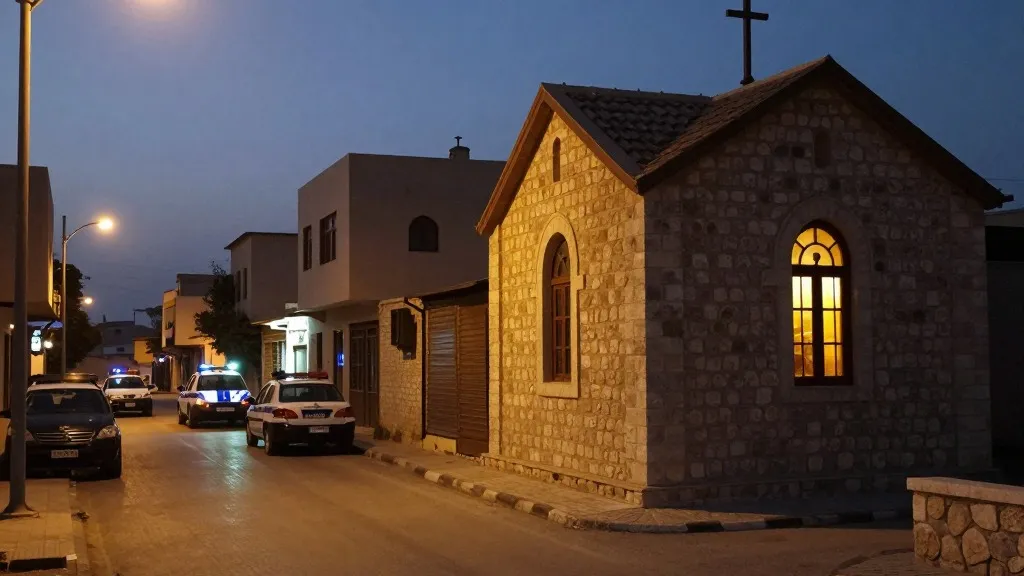
King Abdullah of Jordan has commanded the nation's security apparatus to pursue the attackers with maximum force following a violent shooting at a place of worship in the Karak governorate. The royal court announced this directive on Saturday, confirming that eight individuals lost their lives while forty others sustained injuries in the incident. This decisive order marks a significant escalation in the country's immediate reaction to the violence.
The incident occurred on Friday at a Greek Orthodox church located in Karak, a region situated approximately 120 kilometers southwest of the capital city, Amman. Witnesses described a scene of chaos as armed men opened fire for several minutes during the middle of the day while a funeral service was in progress. Jordanian authorities have categorized the event as an act of extremist terrorism, although no organization has yet stepped forward to claim responsibility for the bloodshed.
In the hours following the gunfire, the Jordanian monarch traveled to the site to assess the situation and meet with local leaders. He expressed his determination to hold the perpetrators accountable, stating that they would be dealt with an iron fist. The Prime Minister, Jafar Hassan, also weighed in on the social media platform X, describing the event as the outcome of a terrorist ideology and blind extremism. He assured the public that the society would not be allowed to drift along this destructive path.
Security measures across the kingdom have been intensified in direct response to the tragedy. The US embassy in Amman reported that patrols have been increased around shopping centers, diplomatic missions, and other prominent locations. Despite these heightened precautions, investigators continue their search for the individuals who carried out the shooting. The government has declared a period of three days for national mourning, as reported by the state-run Petra News Agency.
Survivors have provided vivid accounts of the terror experienced inside the building. Nasser al-Burqan, a lawyer who made it out alive, told Reuters that one of the shooters was standing about two meters away, aiming a handgun directly at him. He later received a call from his son, who was also present at the service, informing him that he had been shot in the leg and was under medical care. Al-Burqan recalled looking out a window after the shooting stopped and seeing two men, one with a mask and the other holding a pistol.
The emotional toll on the local community was evident among the families of the injured. Tarek Ammarin, whose relative was treated at a hospital, described the event as a massacre in every sense of the word. Bahjat al-Rushda, the mayor of the nearby village of Shihan, labeled the attack wicked and expressed hope that the country would maintain its safety. These personal reactions underscore the shock felt by a population that rarely experiences such targeted violence.
Officials noted that it is premature to determine if the attackers had connections to established groups within Jordan or from abroad. However, the kingdom, which is a key ally to the United States in the regional fight against violent armed factions, has a history of preventing similar plots. Authorities have previously thwarted attempts by groups adhering to strict interpretations of Islam. The event highlights the continued vulnerability of minority communities in a country that hosts numerous biblical sites attracting international pilgrims.