Brazilian Politics: Lula Rally Precedes Historic Runoff
Crowds gathered in Rio de Janeiro on Saturday as voters prepare for a decisive vote on Sunday.
By Ama Ndlovu ·
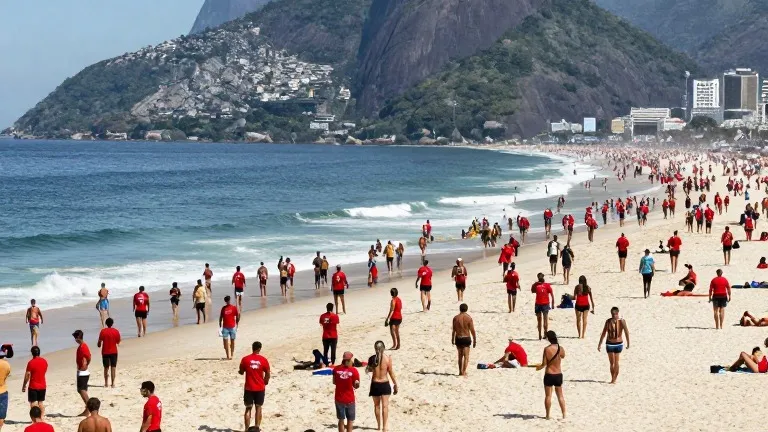
The Brazilian presidential race enters its final stage on Sunday, with 159 million eligible voters set to choose between President Luiz Inácio Lula da Silva and far-right challenger Flávio Bolsonaro.
On Saturday, tens of thousands of supporters filled the two-and-a-half-mile stretch of Copacabana Beach in Rio de Janeiro. The crowd, largely dressed in red, moved through the sand in a procession described by observers as resembling a carnival.
Activists displayed a large banner with the text, "WE ARE GOING TO TURN THIS AROUND!" Josias Silva, a 61-year-old truck driver, carried a handmade sign reading, "Lula re-elected. Tomorrow will be a new day." Silva stated that recent street protests, often led by students, indicate that "the people have woken up." He predicted Lula would secure more than 60% of the vote, although current polling suggests a much tighter contest.
The first round of voting took place on 4 October. Flávio Bolsonaro led with 47% of the vote, while Lula received 45%. In Brazilian democratic history since the 1980s, a candidate who finishes second in the first round has never won the subsequent runoff. A victory for Lula would therefore mark a first in the country's modern political history.
Most analysts currently view Bolsonaro as the slight favorite. The son of former President Jair Bolsonaro, who served from 2019 to 2022, has campaigned on a platform of strict enforcement against violent crime. However, Lula has gained ground in recent days following several scandals involving his opponent. Last week, the magazine Piauí reported that Flávio Bolsonaro attended a boat party during the peak of the 2020 coronavirus outbreak, which included sex workers and vaccine lobbyists seeking a deal with his father's government.
For many attendees, the election carries personal and historical weight. Jair Bolsonaro is currently serving a 27-year prison sentence for plotting a coup after losing the 2022 election. Some democrats fear he could be released or return to power if his son wins. Press reports indicate that other plotters, now jailed or in exile, may be offered senior military and police positions. Marta Moraes, a 59-year-old restaurateur, said her opposition is directed at "Bolsonarismo" rather than the right in general. She noted that she lost four relatives due to government neglect during the pandemic.
A large portion of the crowd is connected through "Lula's Army," a WhatsApp group with 10 million members created after the first round. Isabella Gaze, a 64-year-old retired teacher, described the event by saying, "This isn't a normal election." Cammy Marinho, a 49-year-old DJ and activist, spent the previous fortnight attempting to persuade Bolsonaro voters and abstainers to switch sides. Heitor Lopes da Silva, 14, traveled from Duque de Caxias in a wheelchair to show support for the president.
Supporters of Bolsonaro also held rallies. In Belo Horizonte, the capital of Minas Gerais, thousands gathered in Praça da Liberdade wearing yellow football jerseys and waving Brazilian and US flags. Minas Gerais has the second-largest electorate in the country and is considered a key bellwether; no candidate has won the presidency without carrying the state. Bolsonaro led the state by just under 5% in the first round.
Antonio Carlos Costa Jr., a 59-year-old shooting club owner, argued that Jair Bolsonaro granted citizens the right to self-defense and that his son would maintain that policy. Security experts note that Jair Bolsonaro's relaxation of gun laws diverted many firearms to criminal gangs, while Lula has since tightened the rules. Erika Cavalcante, a 43-year-old architect, carried a sign reading, "Don't let the mobsters win," reflecting doubts among some Lula supporters regarding Bolsonaro's ties to Rio's paramilitary militias.
Voting takes place on Sunday across the country. The results will determine whether the current president completes his term or whether the political power shifts to the Bolsonaro faction.
More Politics · World news · Report a business · Got a Story?