Vermont Youth Hunters Gather Early Season Data
Twelve-year-old Harper Couture brought in a 120-pound deer as young hunters and biologists collect herd statistics before the public season opens.
By Ananya Sharma ·
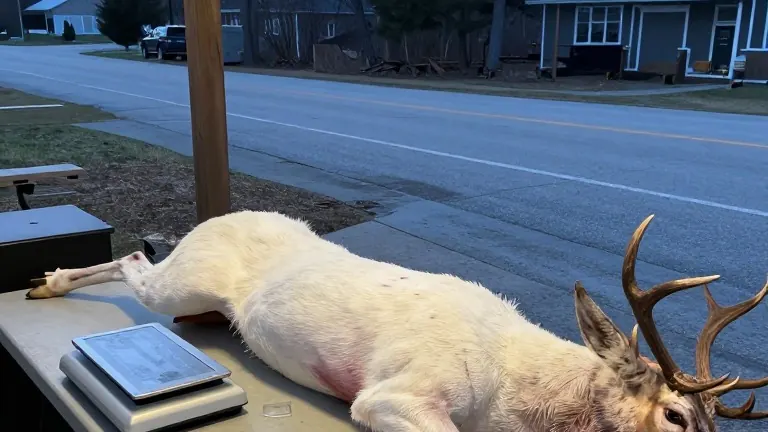
Harper Couture, 12, stood at the check station in St. Albans with a deer weighing nearly 120 pounds. The animal, killed earlier that morning with assistance from her father, was one of many brought in during the youth hunting weekend. This event occurs immediately before the official deer hunting season begins across Vermont.
The weekend serves a dual purpose. It provides young residents with a chaperoned environment to practice hunting skills while contributing to a state-wide deer conservation project. Every buck or doe harvested during this period must be weighed, measured, and examined by state biologists and University of Vermont students. They record antler size and extract teeth to build a database on the local herd.
Josh Couture, Harper’s father from Fairfax, said his two daughters have completed their hunter certification. He described the experience as a way to pass down practical knowledge about the woods, including how to move quietly and what to do in the field. "It’s pretty amazing, her and her sister both are certified slayers," he noted. For the Couture family, the harvest also means dinner, as they consume nearly every part of the animal.
Amy Alfieri, a biologist with the Vermont Fish and Wildlife Department, explained that harvesting deer helps maintain habitat balance. The data collected from these early hunts allows biologists to track the health and population density of the deer herd before the general public starts hunting. "Our deer biologist is the one who has to take in all of this data, enter it, plug it in and learn from this information that we’re all gathering for him," Alfieri said.
The early timing also benefits the hunters themselves. Mason Smith, 14, said the deer are less spooked during this weekend, making them easier to locate and approach. Natalie Gagnier, who has been hunting for five years, valued the educational aspect of the process, noting that learning about the animal’s life history makes the experience more meaningful.
The weekend functions as a structured learning period for new hunters. Experienced mentors focus on etiquette and safety, while the state agencies focus on data collection. The process turns the young hunters into active participants in scientific monitoring.
After the check-in process is complete, the young hunters are free to take their deer home. For Harper, the task of cleaning the animal is a mixed experience. She dislikes removing the internal organs but enjoys the process of cutting up the meat once it has been cleaned.