
A Berlin Square: Where Kollwitz's Statue Watches Over Children at Play
At Kollwitzplatz in Berlin, a bronze statue of the expressionist artist observes children playing on swings, evoking themes of protection and peace in a city preparing for a new era of military service.
By Adrian Carter ·
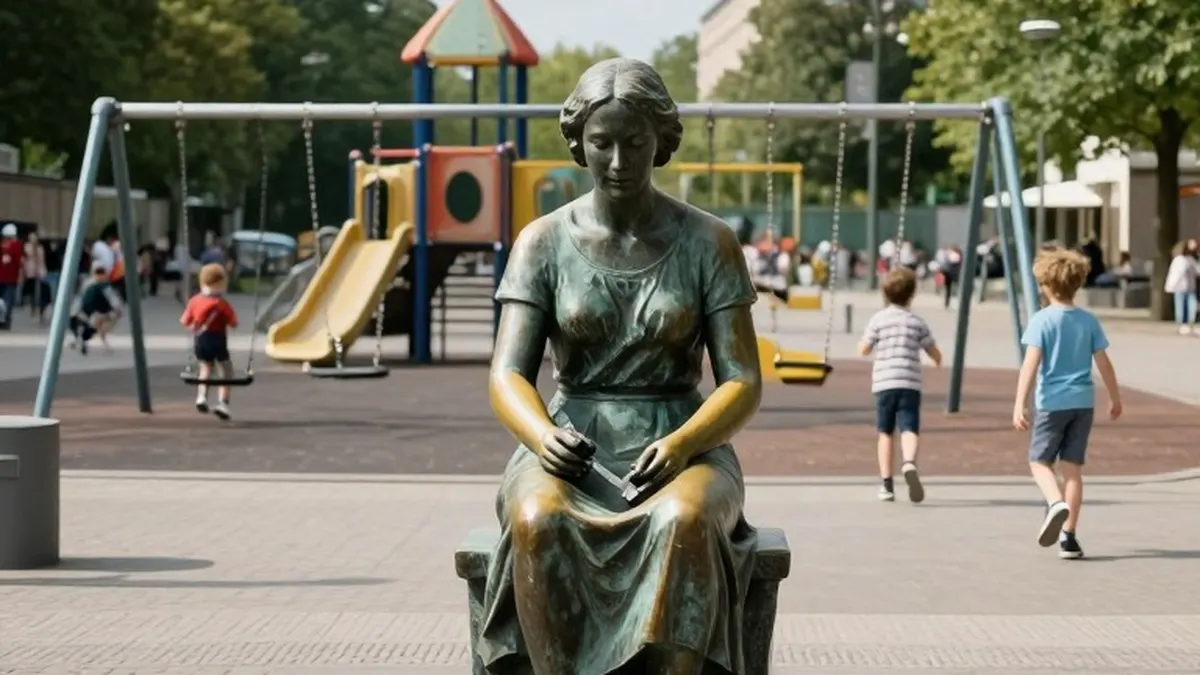
Standing in the center of a lively public square in Berlin, the immediate experience is defined by sound rather than sight. The air is filled with the sharp cries and joyful shouts of children using the nearby playground equipment. These young visitors are engaged in active play on swings and slides, their movements constant and energetic. Overseeing this scene is a bronze statue of Käthe Kollwitz, the renowned German expressionist artist. Her presence in the square is a deliberate tribute to her life and work, as she lived just off this specific location in the city.
The square bears Kollwitz's name, known locally as Kollwitzplatz. The connection between the artist and the location is deeply personal and historical. At the turn of the 20th century, Kollwitz's own children likely played in this exact spot. The site serves as a living link to the past, where the daily life of the artist's family intersected with the public space that now honors her memory. The juxtaposition of the silent bronze figure and the active children creates a poignant visual contrast that speaks to themes of continuity and change.
Kollwitz's artistic legacy is heavily defined by her response to the devastation of World War I. During and after the conflict, her lithographs, woodcuts, and sculptures focused intensely on the suffering and futility of war. Her work is characterized by a deep emotional intensity, often depicting undernourished children with wide, fearful eyes. These figures are frequently shown in the protective arms of mothers, whose faces are etched with profound anguish. This artistic focus on maternal grief and child vulnerability remains a central part of her identity.
A particularly powerful example of this thematic focus is her sculpture The Grieving Parents. This specific statue stands in Belgium, marking the site where her son Peter died while serving at the front. He was only eighteen years old when he fell. The placement of the monument in the country where her loss occurred underscores the personal cost of war that Kollwitz sought to communicate through her art. It serves as a lasting memorial to her family's tragedy and the broader human toll of the conflict.
During a recent visit to the square, the interaction between the children and the statue provided a moment of unexpected connection. As the observer turned away from the playground to focus the camera on Kollwitz, a young boy jumped into the frame. He climbed up onto the statue's plinth, using the bronze figure as a hiding spot during a game of hide and seek. His friend quickly located him, and the two children began to chase each other around the base of the statue. In their playful movement, they inadvertently embraced Kollwitz in a manner that mirrored the protective gestures seen in her lithograph renderings of her own boys.
The statue itself maintains a calm and composed demeanor amidst the surrounding chaos. Kollwitz is depicted in a seated position, holding a charcoal stick in her hand. She appears poised and ready to sketch the happy hubbub of children growing up in what is currently a safe city. The image of the artist capturing the innocence of youth in a peaceful setting stands in stark contrast to the darker themes of her later works. It suggests a moment of respite and normalcy that the artist would have cherished.
However, the current geopolitical climate adds a layer of complexity to this scene. With wars occurring in nearby regions and Germany bringing back military service for a new generation, the sense of security is not taken for granted. This shift in national policy evokes a sudden and visceral urge to protect one's own children, mirroring the protective instincts depicted in Kollwitz's art. The statue continues to watch over the playground, a silent guardian in a space that reflects both the joy of childhood and the enduring human desire for peace and safety.