3 Hours: The St. Petersburg Talks That May Restart Ukraine Peace Efforts
A brief meeting between US and Russian envoys has triggered a tentative agreement to resume negotiations, though skepticism remains high over previous stalled efforts and ongoing military strikes.
By Thabo Mokoena ·
The fragile prospect of renewed diplomacy in the Ukraine conflict faces a critical test this month, as Moscow and Washington agree to restart trilateral talks. The tension is palpable: while leaders speak of a new phase in negotiations, Russian missiles continue to strike Kyiv, and the two sides remain deeply divided on core demands. This development, announced on Wednesday, suggests a pivot in strategy after more than four and a half years of war, yet the path forward is far from clear.
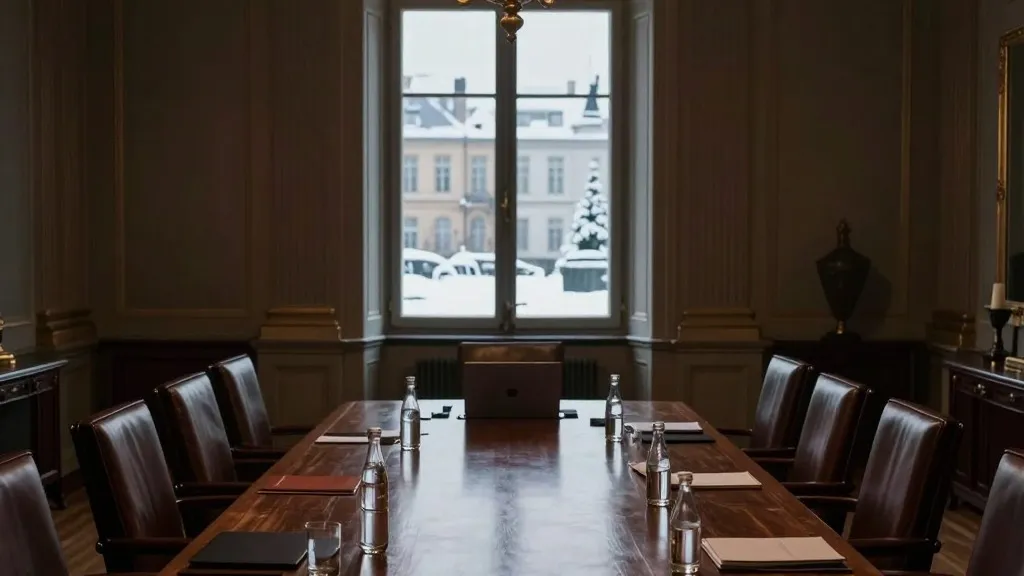
Kremlin official Yuri Ushakov stated that President Vladimir Putin agreed in principle to resume negotiations with the United States and Ukraine after November 10. This would mark the first such talks since February. The agreement followed a three-hour meeting in St. Petersburg between Putin and U.S. envoy Steve Witkoff. Ushakov described the focus of these upcoming discussions as building a security system for both nations following the end of the conflict. He noted that Witkoff and Jared Kushner, who joined by video, had proposed a technical-level meeting and shared progress from their recent conversations with Ukrainian President Volodymyr Zelenskyy.
However, the Kremlin remains cautious about the substance of the current proposals. Ushakov told reporters that the plans emerging from a recent meeting in Oslo, where Witkoff also engaged with Zelenskyy and European leaders, contained little of real value in resolving the crisis. While he later admitted on state television that Moscow was not fully satisfied, he characterized the Oslo proposals as a step in the right direction. This measured optimism stands in contrast to the earlier rounds of talks in Abu Dhabi and Geneva, which yielded little progress beyond prisoner exchanges.
Ukrainian President Zelenskyy expressed support for the swift restart of talks, stating in an audio message that the agenda is clear: to end the war and prepare for a meeting at the leaders' level. He noted that Russia has often claimed readiness to meet, but previous attempts were canceled. His message arrived shortly after a missile alert sounded over Kyiv, underscoring the gap between diplomatic overtures and the reality on the ground. The U.S. administration, led by President Donald Trump, is pressing Kyiv to make a deal, with Trump telling reporters in the Oval Office that the U.S. has given much to Ukraine and received little in return except grief and loss.
Beyond the conflict itself, the St. Petersburg discussions touched on broader economic and geopolitical issues. Putin indicated readiness to consider restoring economic ties with the U.S. and to discuss the conflict in Iran. Ushakov mentioned that large-scale joint economic projects were discussed in detail, with some nearing the implementation stage. Additionally, the leaders discussed a possible trilateral meeting between Russian, Chinese, and U.S. leaders at an upcoming economic summit in China, with Beijing reportedly already preparing for the event.
The diplomatic activity coincides with significant military movements. Russian attacks overnight killed five people and wounded at least 23 others in Ukraine. In Kyiv, three people died and 12 were wounded, with ten residential buildings damaged. Russian forces also targeted energy facilities in Kyiv and three other cities. The Russian Defense Ministry reported intercepting 373 Ukrainian drones over multiple regions and the Black Sea. Meanwhile, Russia released a retired American teacher, Stephen Hubbard, whom Witkoff described as a goodwill gesture after Trump asked Putin to free him.
Norwegian Prime Minister Jonas Gahr Støre, who met with Witkoff in Oslo, suggested that the parties may be entering a phase where Russia is seeking diplomatic opportunities. He indicated that the new talks would likely occur in mid-November. When asked if Zelenskyy could accept a border along the current front line, Støre said Ukraine would not formally accept it, but might be able to live with it. The coming weeks will determine whether these diplomatic signals translate into tangible progress or if the cycle of talks and stalemate continues.
The situation remains complex, with leaders keen to bring momentum to U.S.-led peace efforts despite past setbacks. The release of Hubbard and the scheduling of high-level talks suggest a willingness to engage, but the fundamental disagreements and ongoing combat actions pose significant challenges. As the parties prepare for the next round of negotiations, the world watches to see if this latest attempt to end the war will yield results or join a long list of stalled initiatives.
Source: Atlanta News First
More Business · Atlanta news · Business Watchdog · Report a business