20,000 Microducks ordered after CEO demo
Nvidia's acquisition of Hugging Face has resulted in a potential holiday sensation, as the small robotic ducks secured significant preorders following a viral keynote appearance.
By Amy Swan ·
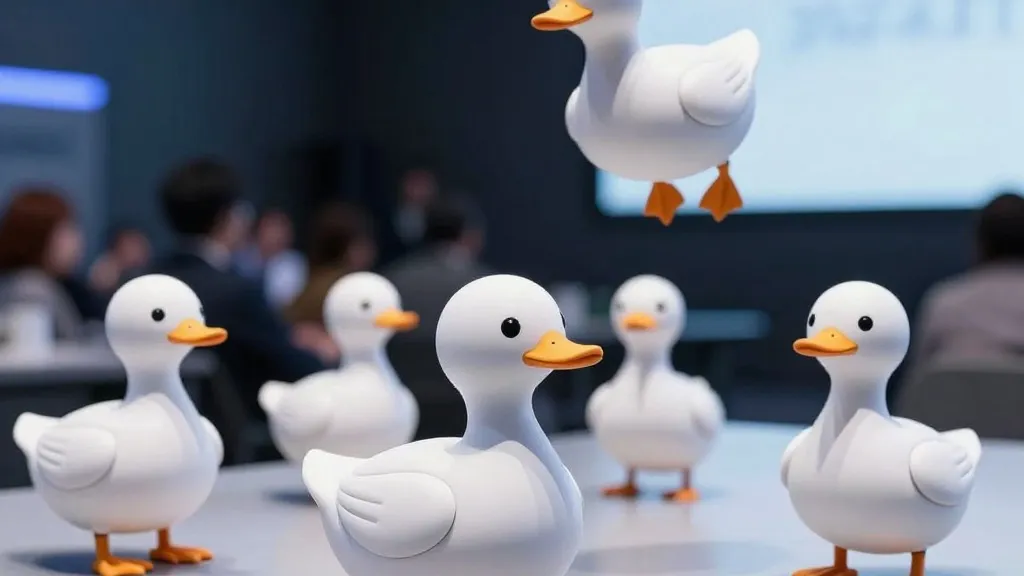
The artificial intelligence industry has spent the past week grappling with a series of high-profile cyberattacks, leading to widespread scrutiny of the sector's security posture. Against this backdrop of digital anxiety, a lighthearted moment emerged from Nvidia's GTC Berlin conference earlier this week. Footage of CEO Jensen Huang interacting with a group of small robotic ducks went viral, offering a stark contrast to the serious concerns dominating tech news. The incident highlights a persistent tension in the sector: the industry is simultaneously viewed as a critical infrastructure risk and a source of consumer novelty.
The rapid adoption of these devices suggests a strong consumer appetite for the product. According to Clem Delangue of Hugging Face, preorders for the Microducks exceeded 20,000 units within a day of the keynote. The robots, which emit sounds reminiscent of the droid R2-D2 and can perform actions such as sitting, falling over, and somersaulting via voice commands, captured immediate attention. Delangue has suggested that these units may become the best-selling robot of the year, noting that promotional materials feature adults interacting with the devices, implying a market that extends beyond traditional children's toys.
With delivery scheduled for the Christmas season, the Microducks are well-positioned to become a prominent holiday item. The timing creates a potential commercial surge for a product that is still relatively new to the market. The question remains whether the initial viral momentum can sustain through the holiday rush or if the novelty will fade before the devices reach consumers. The strong preorder numbers indicate that the initial interest is translating into tangible demand, but long-term retention will depend on the user experience after the initial excitement settles.
The corporate lineage of the Microducks adds a layer of strategic interest to their success. The devices are produced by Pollen Robotics, a company acquired by Hugging Face in 2025. Since Nvidia purchased Hugging Face in September, the Microducks now fall under the GPU giant's umbrella. This makes the Microduck the second robot developed by the Hugging Face division, following the Reachy Mini. The acquisition allows Nvidia to integrate consumer-facing robotics directly into its ecosystem, leveraging its existing hardware and software advantages.
Technologically, the Microducks rely on Nvidia's technology stack for their initial programming. Simulations were used to teach the robots basic maneuvers, including walking, sitting, and standing, which are included in the standard firmware. Pollen Robotics states that owners have the ability to train their units with new tricks and share these customizations with the broader community. This open-source approach aims to extend the lifespan of the product by encouraging user innovation, though it also places a burden on consumers to maintain and update their devices effectively.
There are still open questions regarding the scalability of this consumer product line. While the preorder numbers are impressive, they represent a snapshot in time rather than a guarantee of sustained sales. The integration of the device into Nvidia's broader portfolio suggests a strategic push into consumer robotics, but the long-term viability of this segment remains to be seen. The success of the Microducks could serve as a proof of concept for Nvidia's entry into the physical AI space, or it could be viewed as a one-off marketing success.
The viral nature of the keynote demonstration played a significant role in driving the initial sales spike. The visual appeal of the robots, combined with the high-profile setting, created a memorable moment that resonated with a wide audience. However, the transition from viral sensation to household staple will require consistent performance and customer satisfaction. As the industry recovers from the recent cyberattack narrative, the Microducks offer a tangible, albeit small, reminder that AI can also be a source of simple entertainment.
Source: TechCrunch